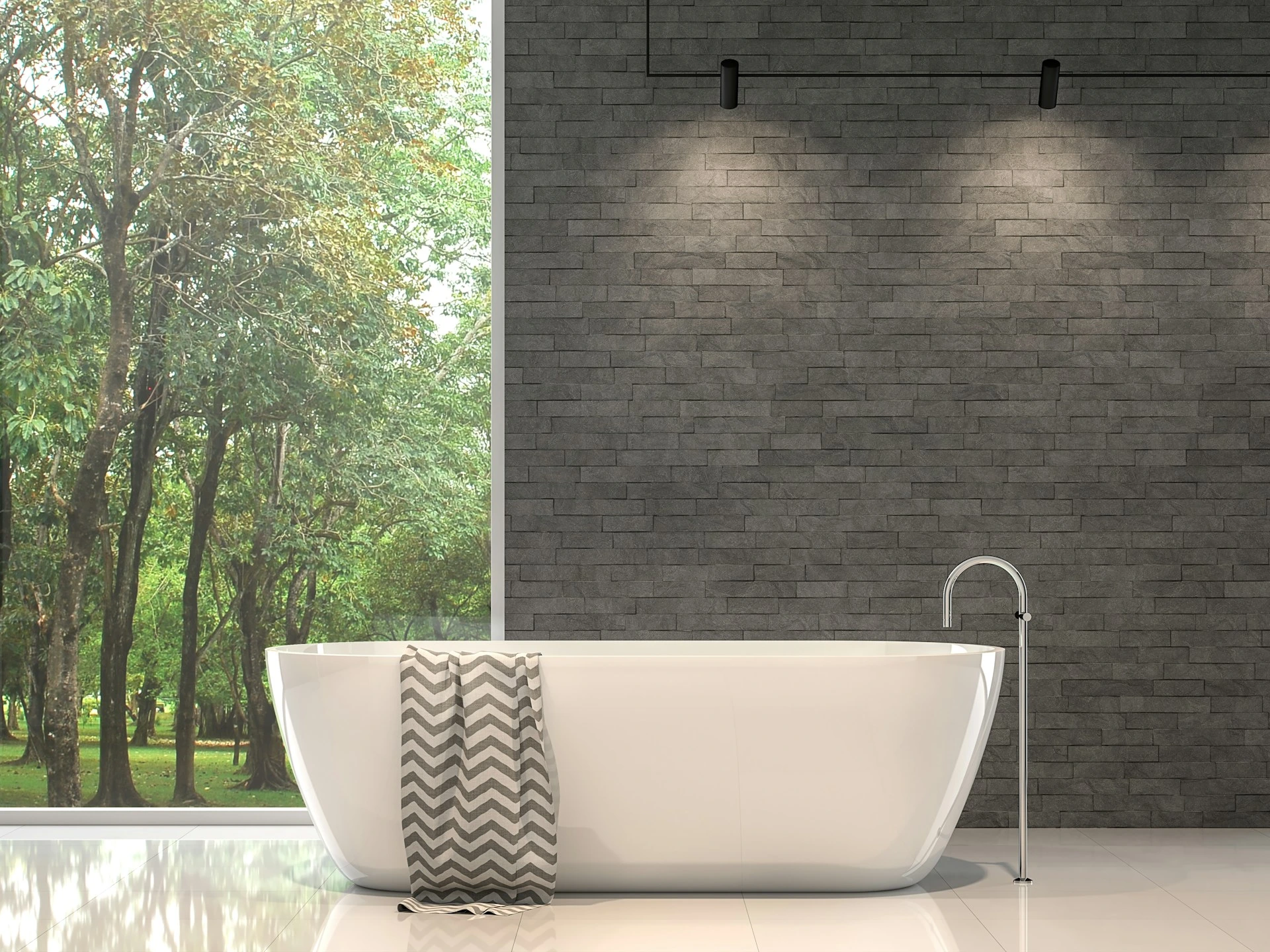
There’s a moment — usually when you walk into a hotel bathroom that’s nicer than your entire house — when you see a freestanding bath and think, Ah. That’s how adults live. It’s a small shock, the way a single object can shift the whole mood of a room. And then, if you’re anything like me, you start mentally rearranging your own bathroom to see if one would fit.
What people don’t always realise is that a freestanding bath isn’t just a design indulgence. It’s a financial decision too, one that pays off in ways that aren’t immediately obvious but become clearer the longer you live with it.
When a bath becomes an asset
A freestanding bath has presence. It anchors a room the way a fireplace anchors a living space. Estate agents know this — they’ll photograph the bath from three angles and put it front‑and‑centre in the listing because it signals “premium home” without needing to say a word.
That matters. Bathrooms sell houses, and designer freestanding baths quietly nudges your property into a higher bracket. Not because buyers are all bath connoisseurs, but because the room suddenly feels intentional, finished, a little bit luxurious.
It’s the same logic behind installing a statement bathroom feature — it elevates the whole space.
The psychology of “this feels expensive”
There’s a strange alchemy at work with freestanding baths. They make even modest bathrooms feel curated. A standard built‑in tub is functional; a freestanding one is an experience.
And people pay for experiences. Not just in hotels — in homes too.
A bathroom that feels like a retreat adds emotional value, which often translates into financial value. Buyers linger longer. They imagine themselves soaking on a Sunday morning. They start justifying a higher offer because the space feels like somewhere they’d actually enjoy being, not just somewhere they’d brush their teeth.
Flexibility that saves money in the long run
One of the underrated advantages of a freestanding bath is how adaptable it is. You’re not locked into a tiled surround or a fixed alcove. If you remodel later, the bath can be repositioned without tearing half the room apart.
That flexibility means:
- Lower renovation costs when you update the bathroom
- Fewer materials (no boxing-in, no panel replacements)
- Less labour because the bath is essentially a standalone piece
It’s a bit like buying good furniture instead of built‑ins — it moves with your taste rather than fighting it.
Energy efficiency, in a roundabout way
A deep, well‑insulated freestanding bath holds heat better than many standard tubs. You fill it once, and it stays warm longer. That means fewer top‑ups, less hot water use, and a slightly kinder energy bill.
It’s not going to halve your utilities, but over years of use, the savings add up. And if you pair it with a water‑efficient heating system, the whole bathroom becomes a surprisingly economical space.
The “treat yourself” upgrade that actually earns its keep
Most home upgrades fall into two categories:
- Things that make your life nicer
- Things that increase your home’s value
A freestanding bath is one of the rare upgrades that does both.
It’s a daily luxury — a place to decompress, to hide from the world, to soak until your fingers wrinkle. But it’s also a long‑term investment. A bathroom with a freestanding bath photographs better, feels more spacious, and signals quality in a way buyers instinctively understand.
Space, strangely, feels bigger
Even though freestanding baths are often larger than built‑ins, they make a room feel more open. Because you can see the floor underneath and around them, the eye reads the space as larger.
That visual trick is worth money. A bathroom that feels bigger is a bathroom that feels more valuable. And if you’re working with a compact space, choosing a slimline freestanding model can create the illusion of breathing room without knocking down walls.
A small rebellion against the purely practical
Bathrooms are usually the most utilitarian rooms in a house. Tiles, taps, storage, ventilation — all necessary, none particularly thrilling. A freestanding bath breaks that pattern. It introduces a sculptural element, something with curves and personality.
It says: “This room isn’t just functional. It’s for living.”
And that shift — from utility to enjoyment — is something buyers notice, guests comment on, and homeowners appreciate every single day.
The bottom line
A freestanding bath isn’t just a pretty object. It’s a financial nudge in the right direction, a design choice that quietly increases your home’s value while making your daily routine feel a little more indulgent.
It’s one of those rare upgrades that pays you back in both money and mood. And honestly, in a world where most home improvements feel like chores, that’s a refreshing change.